<iframe src="https://www.googletagmanager.com/ns.html?id=GTM-TJC6JLCV" height="0" width="0" style="display:none;visibility:hidden">
Skip to content

Online Disability Studies, Rights and Inclusion MSc

Make a difference in the field of disability rights and social justice with this ground-breaking new online Masters degree. Enquire via the form on this page to find out more.

Start dates

March & September 2026

Duration

24 months part-time

Fees

£12,750 (total)

Man being helped to walk down corridor by woman
Applications now open

Register your interest

Man being helped to walk down corridor by woman

Course overview

Disability is an important equality and human rights issue, with disabled people more likely to experience poverty and receive fewer education and employment opportunities than non-disabled people.

The online MSc Disability Studies, Rights and Inclusion will support you to recognise, understand and meet the challenges facing disabled people around the world. By studying this innovative online degree, you’ll be equipped to work to ensure that disabled people’s rights are respected, helping to build more inclusive and sustainable societies.

Entry requirements

We welcome applicants from a range of diverse backgrounds. Whether you are applying through a standard or professional-based entry route, we'd love to hear from you.

Standard entry

A 2.1 (hons) bachelor degree, ideally in a social science or humanities related subject.
OR
A 2.1 (hons) bachelor degree in any other subject plus relevant experience

Professional entry

A 2.2 (hons) degree in any subject with at least three years relevant experience.

English language requirements

IELTS 6.5 overall with no less than 6.0 in any component.


Top 100 University

 
We're ranked in the
Top 100 Universities in the world
QS World University Rankings 2025

Top 20

 
In the UK for
Sociology & Social Policy
The Guardian University League Tables 2025

Modules

Our Disability Studies, Rights and Inclusion online course has been designed to cater for online postgraduate learners from around the world who wish to balance their studies with other commitments.

The following list represents typical modules/components studied and may change from time to time. Read more in our terms and conditions.

Module breakdown

The course will begin with a two-week online induction designed to prepare you for online learning at the University of Leeds. It will introduce the study skills you will need to successfully complete your degree.

There are nine 15-credit taught online modules and you‘ll typically spend eight weeks studying each module. The modules cover a variety of subject areas such as Disability and Inequality, Building Enabling Futures and Becoming Change-Makers.

Taught modules typically include 10 hours of tutor-guided learning per week, along with 10 hours of self-guided study per week, plus an assessment at the end of each module. You'll take part in a weekly scheduled webinar to collaborate with other students and your tutor. A module discussion board and an online programme area will also be available for you to connect with your fellow students and share your learning journey.


Disability and Inequality

You’ll be introduced to the nature and lived experience of disability inequalities in contemporary global contexts. The starting point is the concepts of equality and inequality, it considers the differing ways these and related concepts like justice, fairness and entitlement are articulated and applied in relation to disability.

Understanding Disability

You will be provided with the foundational knowledge and understanding about how disability has been conceptualised and theorised. This module will introduce you to the big ideas that emerged from the disabled people’s movement and to theoretical approaches to disability developed by/employed within contemporary Disability Studies.

Disability and Inclusion

In this foundational module, you will discover a theoretical understanding of social inclusion as a basis for building more inclusive cultures, institutions and communities for disabled people. You will examine the nature and operation of exclusion and inclusion in contemporary global contexts and how they are experienced, understood and explained by a variety of actors.

Building Enabling Futures

Build the knowledge and skills to engage critically with the ways in which governments and other civil society actors have sought to meet the needs of disabled people and to evaluate the implications of this for disabled people’s lives, individually and collectively.

A Human Rights Approach to Disability

Explore disability as a human rights issue. Consider the development and influence of the human rights approach to developing disability legislation, policy, programmes and practices. In particular, you will examine the UN Convention on the Rights of Persons with Disabilities (CRPD, 2006) and understand its core principles. 

Realising Disability Equality Through Policy

Gain the knowledge and skills to engage critically with public policy reforms in the field of disability equality. This module provides you with an understanding of opportunities for policy change and the challenges this presents. It allows you to explore the choices facing policy makers, and the strengths and weaknesses of different approaches to policy reform (such as between legislating or educating, or between targeting and mainstreaming policy interventions).

Disability and Global Challenges
Understand the key global challenges in the 21st Century. Considers how disability intersects with these challenges and the implications for disabled people globally. This module provides you with knowledge and skills to critically engage with debates about why certain issues are cast as global challenges and others are not, to assess the specific experiences of disabled people in relation to these challenges and to question what disability inclusion and justice mean in the context of these challenges and the developing responses to them.
Doing Disability Research

Engage with a rights-based approach to disability research and discover key approaches and debates in the field. This includes an engagement with key ethical debates, sampling and a range of qualitative and quantitative research methods.

Becoming Disability Change Makers

This module is designed to be relevant to those who are or strive to be activists, advocates, or allies (be that family-, professional- or academic-allies). What does it mean to be an effective human-rights defender or disability-inclusion change-maker? What are the objectives of these defenders and change-makers? 

Disability Studies Applied Project

The Applied Project provides an opportunity to follow up on your own interests in the context of disability rights and inclusion and explore this in more depth with a strong focus on producing knowledge or evidence to effect positive change.

Why study Disability Studies, Rights and Inclusion online at Leeds?

Our online course is accessible from anywhere in the world, for study when it suits you. You will be able to plan your studies around your job, family life and other commitments, and take breaks between modules if needed.


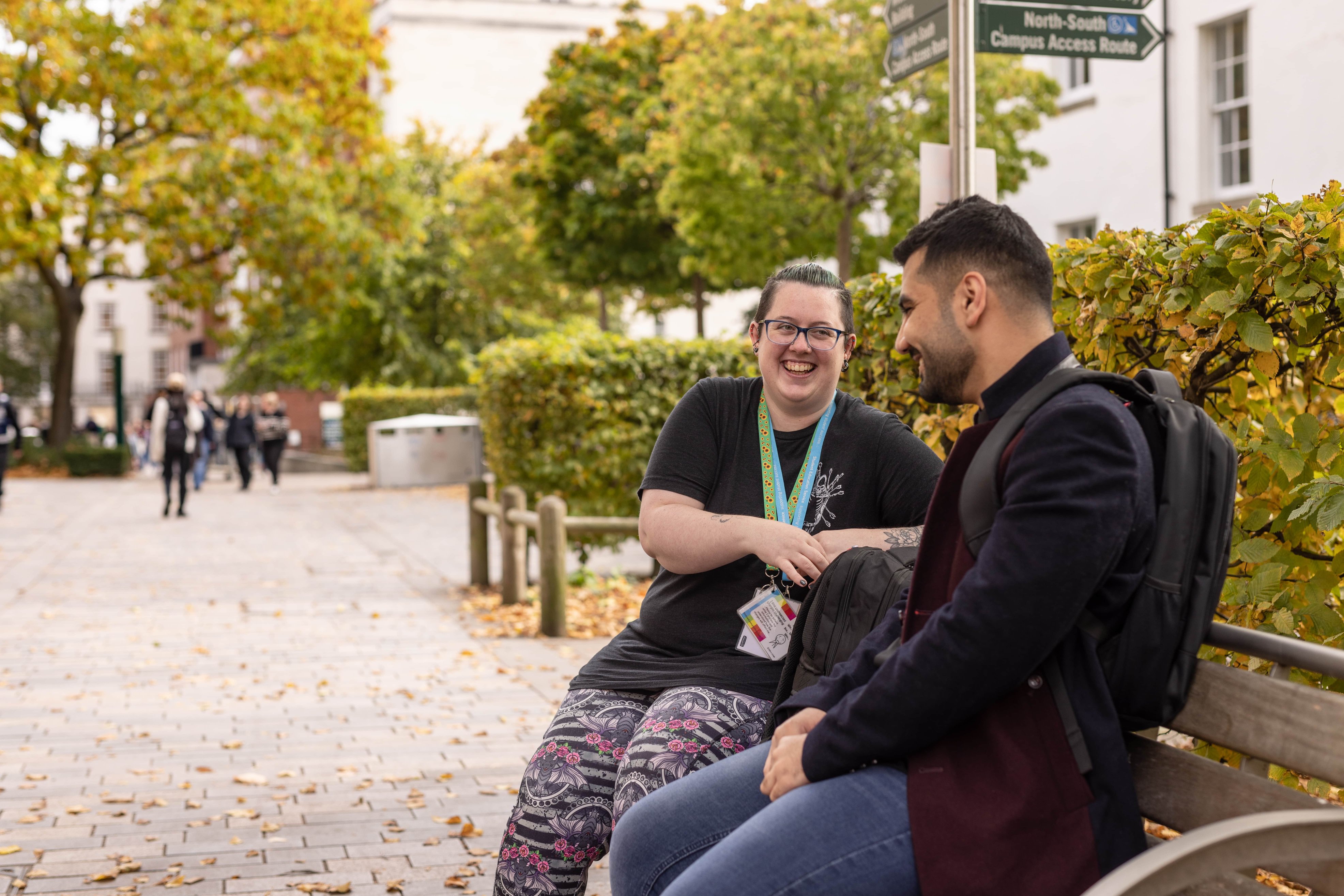
Man and woman smiling and chatting on a bench